

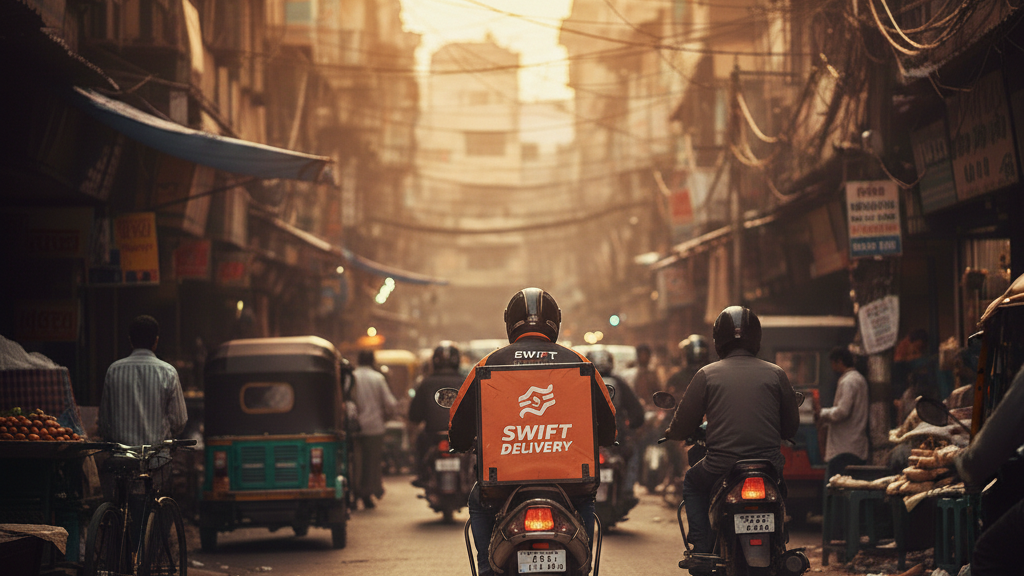

The debate around India's gig economy has calcified into a predictable script. Commentators ask whether delivery drivers earn enough. Activists demand minimum wage protections. Policymakers debate social security contributions.
The right question isn't whether gig workers are paid fairly. It's whether they have any alternative at all.
The structural reality no one wants to say out loud
Here's what India's labor market actually looks like:
73% of the working population has basic education or less. We're not talking about people who need a bootcamp or a certification. We're talking about workers who read and write at an elementary level, if at all.
Only 12% of Indians over 15 possess basic digital skills. In an economy where 75% of corporations report a digital skills deficit, this isn't a gap, it's a chasm. Use a spreadsheet. Send an email. Navigate software. The overwhelming majority cannot.
Youth unemployment sits at 14.8% nationally. In urban areas, it's 18.4%. For young urban women, it's 25.3%. Meaning, one in four actively looking for work and finding nothing.
This is the workforce. Not a subset. Not a demographic segment. This is who shows up when India's economy needs workers.
What the gig economy actually provides
Against this backdrop, platform-based gig work has created something remarkable: employment that requires only a smartphone and a willingness to show up.
The numbers tell the story. India's gig workforce grew from 2.5 million in 2011 to 7.7 million by 2020. By 2030, projections put it at 23.5 million workers. Nearly a 10x increase in two decades.
These aren't just statistics. Consider Lokesh, a commerce graduate profiled by Bloomberg News. After finishing his degree, he took a job at a cotton mill. Four months of grueling shifts in stifling heat. His savings at the end? Zero.
He switched to delivering groceries on his motorbike. Now he saves Rs 10,000 every month toward his dream of starting a saffron trading business. The cotton mill offered him a "formal" job. The gig economy offered him a future. The factory floor is no longer where many young Indians see their future.
This growth isn't happening because platforms are exploiting desperate workers. It's happening because platforms are the only employers willing to hire them.
The arithmetic of exclusion
When activists demand higher wages and formal employment status for gig workers, they're implicitly assuming an alternative exists. That somewhere, there's a factory or an office or a shop that would hire these same workers for better pay and conditions.
India adds roughly 12 million people to its working-age population every year. The formal sector creates a fraction of that in new jobs. The arithmetic is brutal and simple: there aren't enough "good" jobs to go around.
The gig economy didn't create this problem. It's absorbing the fallout from decades of failure to skill workers, to achieve basic digital literacy, failure to build a formal employment base that matches population growth.
What this means
None of this excuses genuine exploitation. Platform companies should contribute to social security, and India's new labor laws now require exactly that. Safety standards matter. Transparent pricing matters.
But the framing matters too.
Asking "are gig workers paid enough?" treats low wages as an aberration to be corrected. Asking "what's the alternative?" reveals low-skill gig work as the safety net that catches millions who would otherwise have nothing.
For 73% of India's workforce -the ones with basic education, no digital skills, and nowhere else to go - the gig economy isn't the problem.
It's the only solution that showed up. Because the alternative was nothing at all.

My hope at the end of this debate, is that we don't end up over-regulating platforms on gig workers so much that it takes away its flexible appeal and over-formalises it. With all its perfect imperfections, for now, we need to learn to embrace the gig economy.
If you are founder building for, enabling, supporting the gig economy, write to my colleagues at WaterBridge Ventures, Baba Prasad Nath, Raj Nayan Datta or myself for a chat.